
Why Teaching Teens Financial Responsibility Matters
In a world of digital spending, student loans, and instant gratification, teaching teens financial responsibility is more important than ever. Teens are forming habits that will follow them into adulthood—good or bad. Yet many leave school without a clear understanding of budgeting, saving, or managing credit.
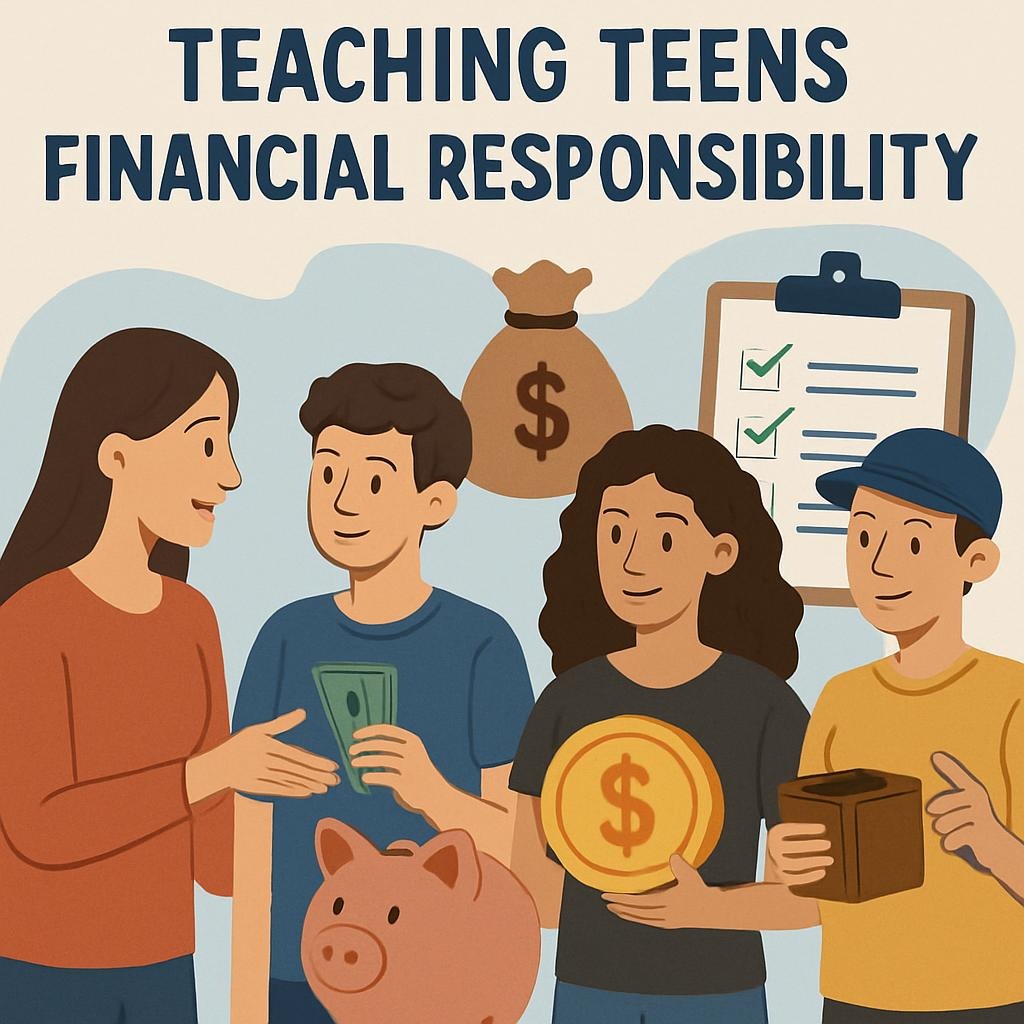
By giving teens the tools to make wise financial choices early on, we empower them to avoid debt, build wealth, and create a secure future. This article explores effective strategies, practical lessons, and conversation starters to help you guide your teen toward financial independence.
1. Start the Money Conversation Early
Many parents avoid talking about money with their children—but silence leads to confusion. Teens are naturally curious and already forming money opinions through what they see at home or online.
Tips for starting the conversation:
- Be open about real-life expenses (groceries, rent, insurance).
- Use everyday moments like shopping or paying bills to explain spending.
- Encourage questions without judgment.
- Share mistakes you’ve made and lessons learned.
Normalize financial discussions so your teen feels confident managing money later on.
2. Teach the Difference Between Needs and Wants
One of the first steps in developing financial maturity is learning to separate needs (food, clothing, housing) from wants (designer clothes, the latest phone, gaming subscriptions).
Activities to help reinforce this:
- Create a shopping list together and label each item as a need or want.
- Give them a budget and let them make purchasing decisions.
- Let them experience the consequences of spending all their money on wants.
Helping teens distinguish between the two lays the groundwork for wise spending habits.
3. Introduce the Concept of Budgeting
Budgeting is the cornerstone of financial responsibility. Teach teens how to track income, plan expenses, and adjust spending to meet goals.
Use this simple teen-friendly budgeting model:
- 50% needs (transport, phone, basic expenses)
- 30% wants (entertainment, clothing)
- 20% savings (future goals, emergency fund)
With a simple spreadsheet can make the process more engaging and visual.
4. Encourage Earning Their Own Money
Nothing builds financial awareness like earning your own money. Encourage teens to take on part-time work, babysitting, tutoring, or even start a side hustle.
Benefits of earning early:
- Builds confidence and independence
- Teaches the value of hard work
- Encourages delayed gratification
- Helps them understand taxes and paycheck deductions
When teens work for their money, they’re more likely to respect how it’s spent.
5. Teach Them to Set Financial Goals
Goal-setting helps teens develop focus and discipline. Whether it’s saving for a concert, a car, or college, clear goals teach the power of planning.
How to help your teen set financial goals:
- Use the SMART framework (Specific, Measurable, Achievable, Relevant, Time-bound)
- Break big goals into smaller milestones
- Set deadlines and track progress visually
- Celebrate when goals are reached
This process turns saving into a rewarding experience rather than a chore.
6. Open a Teen Bank Account
Many banks offer youth or teen checking and savings accounts with parental oversight. These accounts give teens hands-on experience with money management.
What to look for:
- No or low fees
- Mobile banking access
- Parental controls or alerts
- Integration with savings goals
Use the account to teach about balance tracking, ATM use, and avoiding overdraft.
7. Introduce the Concept of Compound Interest
Understanding compound interest early can motivate teens to save. Use real examples to show how small, regular contributions can grow over time.
Use this simple illustration:
- Saving R500/month at 8% interest grows to over R750,000 in 30 years.
- Waiting 10 years to start reduces that amount to around R340,000.
Compound interest rewards consistency and patience—two vital financial traits.
8. Talk About Credit and Debt Early
Credit cards and loans will eventually enter your teen’s life. If you don’t teach them, someone else (or an ad) will. Explain how credit works, including the risks and responsibilities.
Cover these credit basics:
- Interest rates and how they work
- Minimum payments vs. total balance
- How late payments affect credit scores
- Dangers of impulse buying
A strong understanding of debt now can prevent painful mistakes later.
9. Discuss the Importance of Saving for Emergencies
Life is unpredictable. Teaching your teen to prepare for the unexpected builds emotional and financial resilience.
Emergency fund basics:
- Save 3–6 months of essential expenses in adulthood
- As a teen, aim for R1,000–R5,000 as a safety net
- Use a separate savings account to avoid temptation
- Don’t use it for wants—only true emergencies
Even small steps build a foundation of financial security.
10. Use Real-Life Scenarios to Practice Decisions
Teens learn best through experience. Give them opportunities to make financial decisions and deal with the outcomes.
Practical examples:
- Give a monthly allowance to manage independently
- Let them budget for school supplies or birthday gifts
- Plan a holiday or outing with a set amount of money
When teens feel ownership over their decisions, they learn much faster than through lectures alone.
11. Model Financial Responsibility Yourself
Teens learn more from what you do than what you say. If you manage money poorly, they likely will too.
Ways to set a good example:
- Budget openly with the family
- Talk about saving for goals like retirement or holidays
- Avoid impulse buying in front of them
- Show how you compare prices and read contracts
Being transparent builds trust and credibility.
12. Introduce Philanthropy and Giving
Financial responsibility isn’t just about personal gain—it’s also about using money to make a difference.
Teach your teen to give by:
- Donating a portion of earnings to causes they care about
- Volunteering time as an alternative to giving money
- Supporting a friend’s fundraiser
- Creating a giving plan in their budget
This helps build empathy, gratitude, and a healthy perspective on money.
13. Encourage Financial Reading and Learning
Teens are constantly online—so why not point them toward helpful financial content?
Ideas for boosting their money literacy:
- Recommend books like “I Will Teach You to Be Rich” (for older teens)
- Share podcasts or YouTube channels focused on teen money tips
- Use money games or simulations to make it fun (e.g., Monopoly, budgeting apps)
The more exposure they have, the more confident they’ll become.
14. Talk About Future Education and Student Loans
If your teen plans to attend university or college, they need to understand the financial side of education.
What to discuss:
- The real cost of tuition, books, and living expenses
- Scholarships, grants, and bursaries
- How student loans work—and why debt can be risky
- Whether to consider part-time work while studying
Financially informed students make smarter education choices and avoid common traps.
15. Check In Regularly—Not Just Once
One “money talk” isn’t enough. Teens’ needs and interests change quickly, and ongoing guidance keeps them on track.
How to keep the conversation going:
- Schedule monthly or quarterly check-ins
- Review bank statements and budget together
- Help them set new financial goals each season
- Praise good habits and offer solutions for mistakes
This consistency helps financial lessons stick.
Conclusion: Teaching Teens Financial Responsibility Builds Lifelong Confidence
Teaching teens financial responsibility is one of the greatest gifts you can offer your child. When young people understand how to manage money, they gain confidence, independence, and control over their future.
By starting small—through conversations, hands-on practice, and modeling good habits—you help them build a foundation that can support them for life. In a world filled with financial noise, your voice of wisdom will stand out. Invest in their knowledge today, and they’ll thank you for decades to come.